
Introduction
Here’s something worth sitting with for a second: you’ve probably interacted with artificial intelligence at least a dozen times today already — unlocking your phone with your face, scrolling a feed that predicts what you’ll want to see next, or asking a voice assistant for the weather. According to Stanford’s AI Index, AI investment and adoption have grown dramatically over the past few years, and that trend shows no signs of slowing down in 2026.
Artificial Intelligence explained simply means teaching machines to perform tasks that normally require human intelligence — recognizing patterns, understanding language, making decisions, and even creating original content. It’s no longer science fiction or a distant future technology; it’s already reshaping healthcare, education, business, and everyday life right now.
This guide is built for complete beginners. By the end, you’ll understand what AI actually is, how it works under the hood, the different types of AI, the difference between AI, machine learning, and deep learning, real-world examples across every major industry, the best AI tools available in 2026, common myths worth debunking, and even how to start a career in AI if you’re curious to go further. No confusing jargon — just clear, practical explanations.
What is Artificial Intelligence?
Artificial Intelligence (AI) is the field of computer science focused on building machines and software that can perform tasks typically requiring human intelligence — including learning, reasoning, problem-solving, understanding language, and recognizing patterns.
A Brief History of AI
The term “artificial intelligence” was coined back in 1956 at a small academic workshop at Dartmouth College, where researchers first proposed that machines could be made to simulate aspects of human intelligence. Progress moved in waves over the following decades — periods of rapid optimism followed by “AI winters” when funding and interest cooled. The field re-accelerated dramatically with the rise of deep learning in the 2010s, and again with the explosion of generative AI tools like ChatGPT starting in the early 2020s.
The Evolution of AI
- 1950s–1980s: Early rule-based systems and symbolic reasoning.
- 1990s–2000s: Machine learning emerges, allowing systems to learn from data rather than fixed rules.
- 2010s: Deep learning and neural networks unlock breakthroughs in image and speech recognition.
- 2020s: Generative AI brings conversational assistants, image generators, and coding tools into mainstream daily use.
Why AI Matters Today
AI matters because it’s no longer confined to research labs — it’s embedded in the tools businesses and individuals use every day, from customer support chatbots to medical diagnostic assistance and financial fraud detection. According to McKinsey’s research on AI adoption, a majority of organizations now report using AI in at least one business function, a figure that continues climbing year over year.
How Does Artificial Intelligence Work?
At a basic level, AI systems work by finding patterns in large amounts of data using mathematical algorithms, then using those patterns to make predictions or decisions on new information.
Data
Data is the raw material of AI — text, images, numbers, or sound that a system learns from. The more relevant, high-quality data available, the better an AI system can typically perform.
Algorithms
Algorithms are the step-by-step mathematical instructions that process data and identify patterns. Different algorithms suit different tasks, from simple statistical models to complex neural networks.
Neural Networks
Inspired loosely by the human brain, neural networks are layered structures of interconnected “nodes” that process information, adjusting internal weights as they learn from data — similar to how repeated practice strengthens certain neural pathways in humans.
Machine Learning
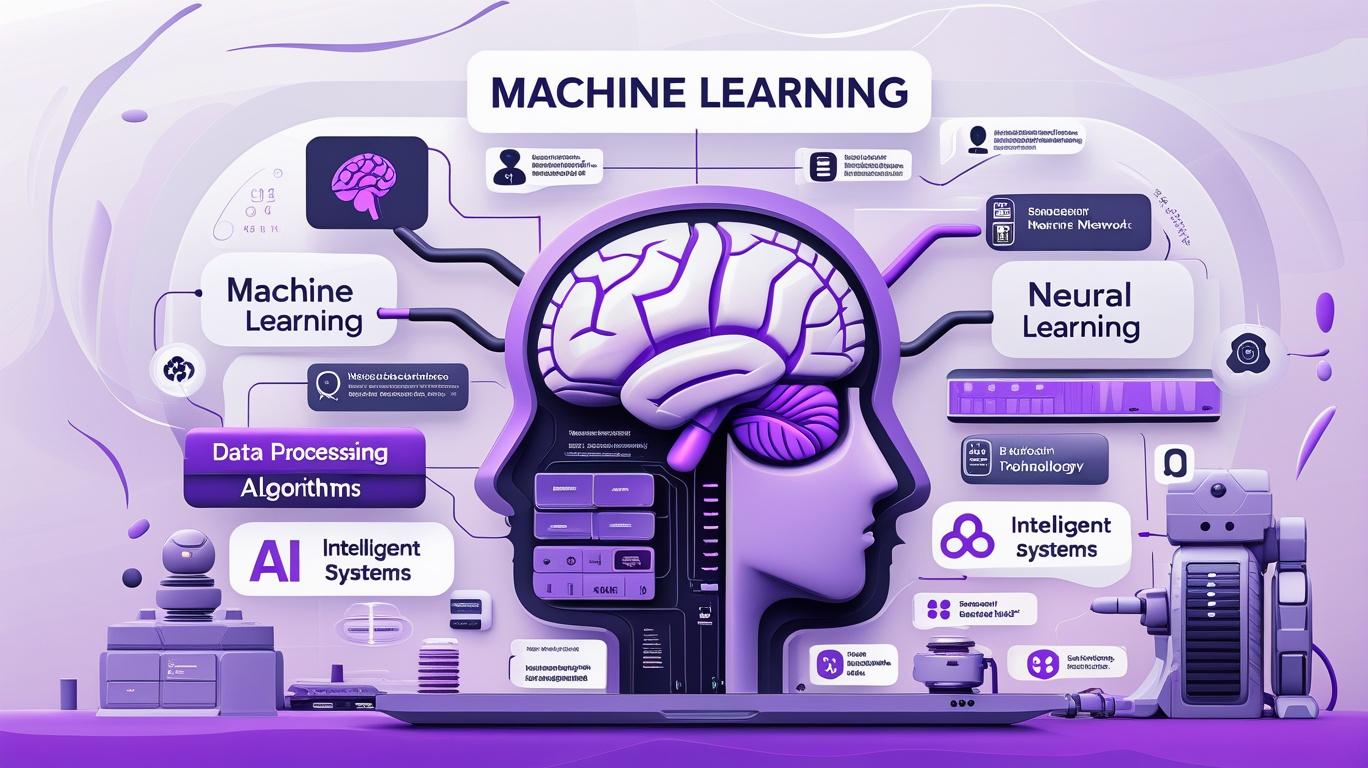
Machine learning is a subset of AI where systems learn patterns from data rather than being explicitly programmed with fixed rules. Example: An email spam filter that improves over time as it learns from examples of spam versus legitimate email.
Deep Learning
Deep learning is a subset of machine learning that uses neural networks with many layers (“deep” networks) to handle much more complex patterns, such as recognizing faces in photos or understanding spoken language.
How Generative AI Works
Generative AI refers to AI systems capable of creating new content — text, images, video, music, or code — rather than simply analyzing or classifying existing data.
- ChatGPT – A conversational AI model built by OpenAI, widely used for writing, brainstorming, and answering questions.
- Claude – Anthropic’s AI assistant, known for strong long-form reasoning, writing, and document analysis.
- Gemini – Google’s AI model, deeply integrated with Google Search and its broader product ecosystem.
- Image Generation – Tools like Midjourney and Adobe Firefly create original images from text descriptions.
- Video Generation – Emerging tools can generate short video clips or realistic avatars from text or images.
- Music AI – AI systems can compose original music or generate backing tracks from simple prompts.
Real-Life Examples of Artificial Intelligence
- Healthcare – AI assists in medical image analysis, early disease detection, and drug discovery research.
- Education – Personalized learning platforms adapt lessons to each student’s pace and comprehension level.
- Finance – Fraud detection systems flag unusual transaction patterns in real time.
- Banking – Chatbots handle routine customer inquiries, while AI models assess credit risk.
- Retail – Recommendation engines suggest products based on browsing and purchase history.
- Manufacturing – Predictive maintenance AI identifies equipment issues before they cause costly downtime.
- Transportation – Route optimization and early self-driving technology rely heavily on AI systems.
Benefits of Artificial Intelligence
- Improved Productivity – Automating repetitive tasks frees up time for higher-value work.
- Automation – Routine processes can run with minimal human intervention.
- Better Decisions – Data-driven insights support more informed business and personal decisions.
- Higher Efficiency – AI can process and analyze information far faster than manual methods.
- Personalization – Recommendations and experiences tailored to individual preferences.
- Lower Costs – Automation can reduce operational costs over time.
- Innovation – AI enables entirely new products and services that weren’t previously possible.
- Better Customer Experience – Faster response times and more relevant support interactions.
Disadvantages of Artificial Intelligence
- Job Displacement – Automation can eliminate certain roles, requiring workforce reskilling.
- Privacy Concerns – AI systems often rely on large amounts of personal data, raising privacy questions.
- Bias – AI models can reflect or amplify biases present in their training data.
- Security Risks – AI can be misused for malicious purposes, including sophisticated scams.
- Ethical Issues – Questions around accountability, transparency, and fairness remain unresolved in many areas.
- High Implementation Costs – Building or integrating advanced AI systems can require significant investment.
- Dependence on Technology – Over-reliance on AI systems can reduce critical human oversight if not carefully managed.
Artificial Intelligence in Daily Life
You likely already rely on AI more than you realize:
- Smartphones – Face unlock, predictive text, and camera enhancements all use AI.
- Google Search – Ranking algorithms use AI to understand queries and match relevant results.
- Netflix & YouTube – Recommendation systems predict what you’re likely to watch next.
- Amazon – Product recommendations and dynamic pricing rely on AI models.
- Google Maps – Traffic prediction and route optimization use AI-driven analysis.
- Alexa & Siri – Voice assistants use natural language processing to understand and respond to requests.
How to Start Learning Artificial Intelligence
A Simple Roadmap
- Build a foundation in basic math (statistics, linear algebra) and programming (Python is the most common starting point).
- Learn the fundamentals of machine learning concepts and terminology.
- Practice with beginner-friendly datasets and simple projects.
- Explore deep learning basics once comfortable with core machine learning concepts.
- Build small real-world projects to apply what you’ve learned.
Skills Worth Building
- Python programming
- Basic statistics and probability
- Data analysis fundamentals
- Understanding of machine learning concepts
- Familiarity with AI tools and prompting techniques
Learning Resources
- Courses: Introductory machine learning and AI courses from major online learning platforms.
- Books: Beginner-friendly AI and machine learning introductions widely available in print and digital formats.
- YouTube Channels: Numerous educational channels offer free, beginner-friendly AI explainer content.
- Communities: Online forums and communities dedicated to AI and machine learning discussion and support.
Practice Websites: Platforms offering hands-on coding exercises and beginner AI projects.
Frequently Asked Questions
- What is Artificial Intelligence? Artificial Intelligence is the field of computer science focused on building machines that can perform tasks typically requiring human intelligence, such as learning, reasoning, and understanding language.
- Is AI difficult to learn? AI has a learning curve, especially around math and programming fundamentals, but structured beginner resources make it accessible to motivated learners without a technical background.
- Can AI replace humans? AI can automate specific tasks, but it generally augments human work rather than fully replacing it, while also creating new roles focused on building and managing AI systems.
- How does ChatGPT work? ChatGPT is trained on vast amounts of text data to recognize language patterns, allowing it to generate coherent, contextually relevant responses to a given prompt.
- Is AI safe? AI safety depends heavily on how systems are designed, tested, and governed — responsible development practices and human oversight are essential to minimizing risk.
- Who invented AI? The term “artificial intelligence” was coined in 1956 by researchers at a Dartmouth College workshop, widely considered the founding event of the field.
- What are examples of AI? Common examples include voice assistants, recommendation systems, spam filters, facial recognition, and generative AI tools like ChatGPT and Midjourney.
- What are AI tools? AI tools are software applications powered by artificial intelligence that assist with tasks like writing, image creation, coding, and data analysis.
- What is Machine Learning? Machine learning is a subset of AI where systems learn patterns from data rather than following fixed, explicitly programmed rules.
- Can beginners learn AI? Yes — with structured resources covering basic programming, statistics, and machine learning fundamentals, beginners can build a solid foundation over time.
Conclusion
Artificial Intelligence explained simply: it’s the technology teaching machines to recognize patterns, understand language, and even create original content — and it’s already woven into daily life far more than most people realize. From healthcare and education to the voice assistant on your phone, AI’s influence continues to expand rapidly, and 2026 is shaping up to be another pivotal year in that growth.
Whether you’re a curious beginner, a business owner exploring automation, or someone considering a career shift into AI, the fundamentals in this guide give you a solid, honest starting point — free of hype and jargon.
Ready to explore further? Try a beginner-friendly AI tool like ChatGPT or Claude today, start with one small task, and see firsthand how artificial intelligence can support your work — then keep learning from there.