
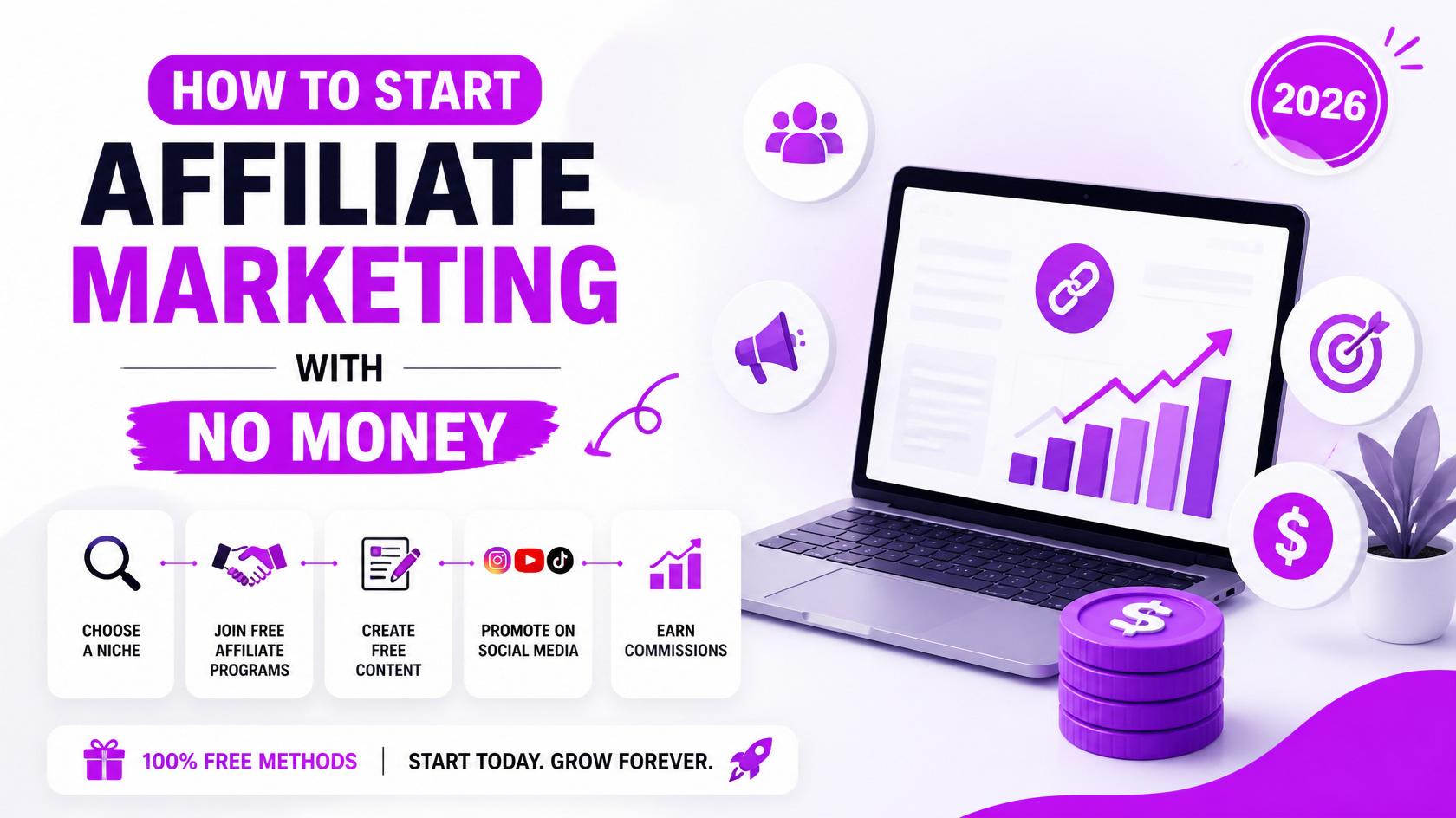
Can You Start Affiliate Marketing with No Money?
Yes — it’s absolutely possible. Thousands of affiliates have started using entirely free platforms and free traffic sources. That said, it’s important to separate realistic expectations from hype.
Expectations vs. Reality
Starting for free means trading money for time. Instead of paying for ads or premium tools, you’ll invest more hours into content creation, community engagement, and organic promotion.
Time Investment
Expect to spend several hours per week consistently for at least three to six months before seeing meaningful results. Free traffic generally takes longer to build than paid traffic.
Skills Required
- Basic writing ability
- Willingness to learn SEO fundamentals
- Consistency and patience
- Comfort with trial and error
Common Misconceptions
- “No money” doesn’t mean “no effort” — it simply shifts the investment from cash to time.
- Free traffic sources can be just as effective as paid ones when used strategically and consistently.
Benefits of Starting Without Investment
- Low financial risk – You have nothing to lose financially if things don’t work out immediately.
- Learn valuable skills – Writing, SEO, marketing, and analytics skills that carry into future opportunities.
- Flexible work – Build your business around your existing schedule.
- Global opportunities – Reach audiences and affiliate programs worldwide.
- Passive income potential – Free content can continue generating income long after publishing.
- Scalable business model – Once you see what works, you can reinvest early earnings to grow faster.
Key Takeaway: Starting with no money forces you to build genuinely valuable content and real audience trust — habits that create a much stronger long-term foundation than shortcuts ever could.
Step-by-Step Guide to Start Affiliate Marketing with No Money
Step 1: Learn the Basics of Affiliate Marketing
Before publishing anything, spend a few days understanding how commissions, cookies, and affiliate networks work. Free resources like affiliate network blogs, YouTube tutorials, and official program help centers are excellent starting points.
Step 2: Choose a Profitable Niche
Pick a niche that balances your genuine interest with commercial demand. Popular beginner-friendly niches include:
- Technology
- Finance
- Health
- Fitness
- Beauty
- Education
- AI Tools
- Digital Marketing
- Software
Travel
Step 4: Create Free Content
You don’t need a paid website to begin. Free platforms let you start publishing immediately:
- Blog platforms (e.g., WordPress.com free tier, Blogger) – Advantage: full article control. Limitation: less customizable than self-hosted sites.
- Medium – Advantage: built-in readership. Limitation: less control over branding and SEO.
- LinkedIn – Advantage: great for B2B/software niches. Limitation: content has a shorter visibility window.
- Quora – Advantage: direct access to people actively asking questions. Limitation: strict self-promotion rules.
- Reddit – Advantage: highly engaged niche communities. Limitation: requires authentic, non-promotional participation.
- Facebook – Advantage: groups allow community building. Limitation: organic reach can be limited.
- Instagram – Advantage: strong visual engagement. Limitation: link placement is restricted outside bio/Stories.
- Pinterest – Advantage: long content lifespan and search-like discovery. Limitation: requires consistent, appealing visuals.
- YouTube Shorts – Advantage: fast content production and reach. Limitation: shorter format limits in-depth explanation.
- TikTok – Advantage: strong organic discovery for new accounts. Limitation: highly saturated, fast-paced trends.
- Threads – Advantage: growing platform with lower competition. Limitation: smaller established audience currently.
Step 5: Generate Free Traffic
- SEO – Optimize content for search engines to earn free, long-term traffic.
- Pinterest SEO – Use keyword-rich pin titles and descriptions.
- YouTube SEO – Optimize titles, descriptions, and tags for search.
- Google Discover – Publish timely, engaging content that can appear in users’ Discover feeds.
- Facebook Groups – Share value-first content in relevant communities.
- Quora Marketing – Answer questions genuinely, linking to your content when relevant.
- Reddit Communities – Participate authentically before ever sharing links.
- Email Marketing – Start a free-tier email list to nurture an owned audience.
- Content Repurposing – Turn one blog post into multiple social posts, a video script, and an email.
Step 6: Create Helpful Content That Converts
- Product Reviews – Honest, detailed evaluations of a single product.
- Tutorials – Step-by-step guides showing how to use a product.
- Comparisons – “X vs Y” articles for buyer-intent searches.
- Buying Guides – Comprehensive guides for a category of products.
- Listicles – “Best of” round-up articles.
- Case Studies – Documented results from using a product.
- How-to Articles – Solve a specific problem, naturally recommending relevant tools.
Step 7: Build Trust
- Transparency – Be upfront about your affiliate relationships.
- Honest reviews – Share both pros and cons.
- Disclosure – Always include a clear affiliate disclosure statement.
- EEAT – Demonstrate real experience, expertise, authority, and trustworthiness in your content.
- Personal experience – Use products yourself whenever possible.
- Helpful recommendations – Prioritize the reader’s needs over commission size.
- Long-term audience relationships – Engage genuinely rather than only promoting.
Step 8: Track and Improve Performance
Monitor:
- Clicks
- Conversions
- Bounce rate
- Click-through rate (CTR)
- Organic traffic
- Search rankings
- Return on investment (ROI, measured in time and effort)
Recommended free analytics tools: Google Analytics, Google Search Console, and built-in platform insights (YouTube Studio, Pinterest Analytics, Instagram Insights)
Common Mistakes Beginners Make
- Waiting for the “perfect” niche – Solution: choose a solid niche and start; refine as you learn.
- Publishing content without keyword research – Solution: always check search intent before writing.
- Overloading content with affiliate links – Solution: place links naturally where they help the reader.
- Skipping affiliate disclosures – Solution: always disclose clearly and early.
- Promoting products you haven’t researched – Solution: prioritize honesty and real experience.
- Expecting instant results – Solution: commit to at least 3–6 months of consistent effort.
- Spreading effort across too many platforms at once – Solution: master one or two platforms first.
- Ignoring analytics – Solution: review performance data regularly to guide decisions.
- Writing thin, generic content – Solution: aim for depth and genuine helpfulness.
- Neglecting mobile readability – Solution: check how your content appears on phones.
Affiliate Marketing Success Tips
- Choose a niche you can talk about for years.
- Focus on solving real problems, not just selling.
- Always disclose affiliate relationships.
- Test products yourself whenever possible.
- Prioritize long-term SEO over short-term tactics.
- Build an email list from your very first week.
- Repurpose content across multiple free platforms.
- Update older content regularly to maintain rankings.
- Use comparison tables to boost conversions.
- Master one platform before expanding to others.
30-Day Action Plan
Week 1: Foundation – Day 1: Research and choose your niche. – Day 2: Validate your niche using free keyword tools. – Day 3: Sign up for 2–3 relevant affiliate programs. – Day 4: Choose your primary free platform (blog, YouTube, or social). – Day 5: Set up your account/profile and branding. – Day 6: Research your top 10 target keywords or content ideas. – Day 7: Outline your first three pieces of content.
Week 2: Content Creation – Day 8: Write/record your first piece of content. – Day 9: Edit and optimize it for SEO. – Day 10: Publish your first piece of content. – Day 11: Share it across one or two relevant communities. – Day 12: Create your second piece of content. – Day 13: Publish your second piece of content. – Day 14: Set up free email list signup.
Week 3: Traffic and Engagement – Day 15: Create your third piece of content. – Day 16: Publish and promote it. – Day 17: Engage authentically in niche forums or groups. – Day 18: Repurpose one article into a social post or short video. – Day 19: Answer 3–5 relevant questions on Quora or Reddit. – Day 20: Create your fourth piece of content. – Day 21: Review early analytics and adjust your approach.
Week 4: Optimization and Growth – Day 22: Publish your fifth piece of content. – Day 23: Update and improve your first published article. – Day 24: Build 1–2 more platform profiles for cross-promotion. – Day 25: Send your first email newsletter, if applicable. – Day 26: Analyze which content or platform is performing best. – Day 27: Create a content calendar for month two. – Day 28: Reach out to a niche community or forum with a helpful contribution. – Day 29: Review your affiliate program performance so far. – Day 30: Reflect on lessons learned and set goals for the next 30 days.
Frequently Asked Questions
- Can I start affiliate marketing with no money? Yes, using free content platforms, free affiliate programs, and organic traffic strategies, you can start without any upfront investment.
- Is affiliate marketing free to join? Most reputable affiliate programs are free to join; your only real investment is time and effort.
- How long does it take to earn income? Most beginners see initial results within three to six months of consistent, focused effort.
- Do I need a website to start? No, you can start with free platforms like Medium, YouTube, or social media, though a website adds long-term SEO stability.
- Which affiliate program is best for beginners? Amazon Associates is popular for beginners due to its wide product range and relatively simple approval process.
- Can students do affiliate marketing? Yes, affiliate marketing is popular among students because it requires minimal investment and offers flexible hours.
- How much can beginners realistically earn? Earnings vary widely, from a few dollars a month initially to a significant income over time as content, trust, and traffic compound.
- What’s the fastest way to get free traffic? Platforms like Pinterest and Quora often provide quicker initial visibility than long-term SEO, though search traffic tends to be more sustainable.
- Do I need to know SEO to succeed? Basic SEO knowledge dramatically improves your chances of ranking content and earning consistent organic traffic over time.
- Is affiliate marketing considered passive income? It can become passive over time, but it requires significant upfront, active work to create and promote your content.
Conclusion
Starting affiliate marketing with no money isn’t just possible in 2026 — it’s how many successful affiliates began their journey. The key ingredients are consistency, genuine value creation, and a willingness to learn as you go.
You now have a complete step-by-step roadmap, a 30-day action plan, free tool recommendations, and answers to the most common beginner questions.
Your next step: Choose your niche today, sign up for one free affiliate program, and publish your very first piece of content this week. Consistency beats perfection — and every successful affiliate marketer once started exactly where you are now.
If this guide helped you, consider sharing it with someone else just getting started, leaving a comment with your biggest takeaway, or subscribing for more affiliate marketing tips.